
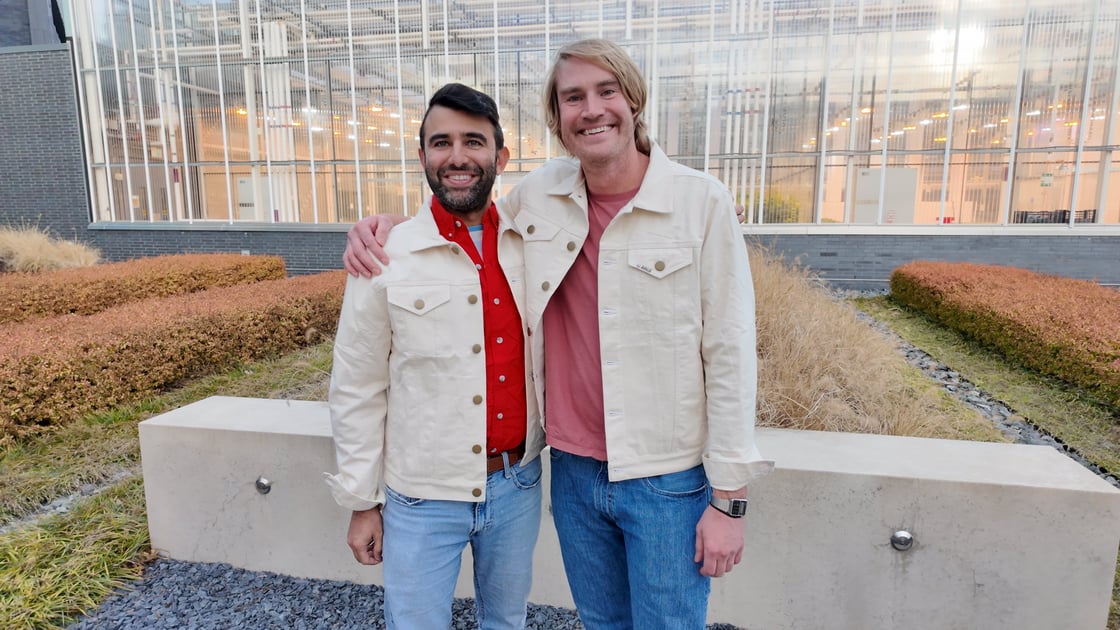
 Durham-based Avalo Cotton and Gaston College’s Textile Technology Center recently unveiled what had been nearly two years in the making.
The result of their efforts is the “Genesis Jacket,” which began its journey in 2024 when Avalo saved cotton harvested from its inaugural diversity trial.
Avalo’s first harvest yielded a handful of bins of fiber, filled with the most genetically complex cotton harvests to date.
“In a field in North Texas, we grew 449 individual cotton varieties from across the world, and across time,” Avalo Cotton’s recent January newsletter said. “Some are more modern types cultivated during the era of agricultural industrialization, others predate the United States’ expansion west of the Mississippi River, and some even predate Columbus’s arrival on Hispaniola.
“Together, these individuals’ genetics serve as the foundation of the Avalo cotton program. Their unprecedented diversity offers the keys to natural fiber that is more resilient, sustainable and vibrant than ever before.
According to the newsletter, Avalo Cotton produced just 17 undyed, embroidered jackets, each created in partnership with Gaston College and NYC Factory.
Avalo is a leader in mapping GxE (gene by environment) interactions. The company’s patented approach matches genetics to climate conditions, forming the foundation of its regional adaptation strategy for cotton.
Jasmine Cox-Wade, Executive Director of Textile Technology at Gaston College’s Kimbrell Campus in Belmont, was thrilled with the program’s success.
“Participating in the development and testing of the yarn used in the Genesis Jacket reflects exactly what the Textile Technology Center strives to do,” Cox-Wade said. “We bridge scientific innovation with real-world textile applications. Our team is proud to support projects that push the boundaries of what natural fibers can become.
“The hard work of our staff brings decades of combined experience in spinning, fiber testing, and textile manufacturing. A project like the Genesis Jacket gives our team an opportunity to apply that expertise in a hands-on way, helping transform a historically significant cotton harvest into a functional, beautifully crafted product.”